How I Built a Custom Card Game WordPress Website with Elementor (Like It Or Not Games Case Study)
Launching a party card game is exciting — until you realise the product lives on Amazon but the brand has nowhere to call home. That was the exact situation behind this card game WordPress website project. The client sold physical decks through Amazon, yet had no marketing site to tell the story, show the cards, or send buyers to checkout. This case study walks through how I planned, designed and delivered a clean three-page site in Elementor, why I skipped WooCommerce entirely, and how I handled a heavy round of client feedback. It's written for founders, small brands and fellow developers who want an honest look at a real project — including the messy, iterative parts most portfolios hide.
The Client & The Problem
The client behind Like It Or Not Games (Fiverr handle itgirlsprodco) is a US-based team building a modern party card game — #LikeItOrNot — aimed at people who "can't get off social media." The physical decks were already selling on Amazon. What they lacked was a proper website to introduce the brand and drive traffic toward those Amazon listings.
They opened the conversation the smart way — by asking for samples in the gaming and entertainment space before committing. I shared a recent mobile-app style site I'd built so they could confirm the visual direction. Their brief was clear: a bold, playful, entertainment-first design that felt like a hybrid of three competitor card-game sites they admired.
The constraints were just as important as the goals. They needed only three pages on a tight $80 budget, they didn't want a rigid template, and — crucially — they did not need an online store. All transactions happened on Amazon, so a full WooCommerce build would have been wasted budget and unnecessary maintenance. If you're weighing a similar decision, my WordPress development services page breaks down when a store makes sense and when it doesn't.
What I Proposed
I proposed a fully custom three-page Elementor build — Home, About Us and Contact — rather than a plug-and-play theme demo. The client asked directly whether this was "a template you just plug in photos" or a genuinely customizable build. My answer was the second: every section designed in Elementor so it could flex around their content, not the other way around.
Why an Amazon redirect instead of WooCommerce
Because every sale ran through Amazon, I recommended pointing the Buy Now buttons straight to their Amazon listing instead of installing a store. This kept the site fast, cheap to maintain, and free of payment or inventory overhead. It's a lean pattern I use often, and you can read more about that approach on my web design and development services page.
Build first, transfer later
The client preferred to approve everything before touching their own hosting. So I proposed building the entire site on my staging server first, then migrating it to their WordPress once signed off. This removed pressure from their side and let them review a live URL without any setup work. That safe migration workflow is part of what I offer through my WordPress site migration and setup services.
The Build Process
This is where an honest case study earns its keep. The build was smooth technically, but it involved many rounds of detailed feedback — the kind that tests patience and organisation more than code.
Staging the site and shaping the hero
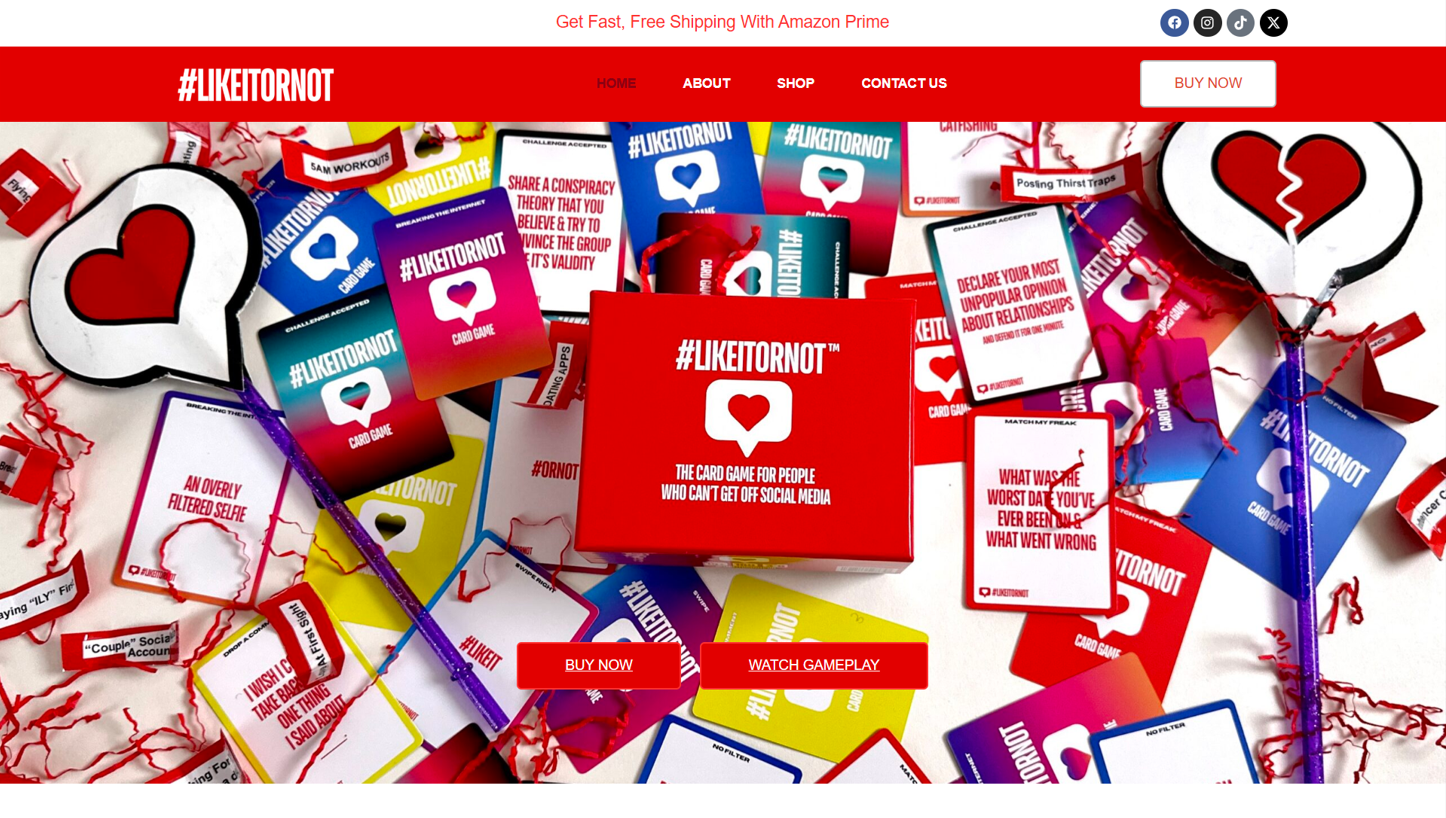
I started on a staging domain so the client could review progress in real time. The first big request was reworking the hero banner. The original opening used a boxy red logo block that felt heavy. The client wanted a wide, horizontal banner featuring their card box in the centre with surrounding cards peeking in on all sides. I cropped and reframed the supplied product photography into a proper banner shape until the header finally clicked — their reaction was a simple "Much better my friend!"
Card flip animations with the real deck
A standout feature was interactive card flip animations. Instead of placeholder graphics, the client sent front-and-back images of four real cards — Dating, No Filter, Breaking The Internet and Challenge Accepted. I set these up to flip on interaction, turning a static section into something that actually showed off the product. Playful micro-interactions like this are exactly what I love adding through my Elementor design services.
Colour consistency and spacing fixes
The client had a sharp eye. She flagged that the site used two different shades of red across sections and asked me to standardise everything to the darker red used in the shipping banner. She also asked me to cut excess vertical red space under a key heading. Small details, but they're the difference between "looks fine" and "looks finished."
Mobile centring and layout polish
During revisions, the client noticed the layout looked like it was "coming off the left side of the page" in mobile and smaller tab views — most visibly on the About page. I re-centred the framing so headings and paragraphs sat correctly across breakpoints. I also centred and resized the tagline, tightened a two-line red header into a clean one-liner, and corrected an About-page paragraph the client rewrote for grammar. Responsive polish is never optional, and it's baked into every project on my services.
Migrating to the client's hosting
Once the design was approved, I migrated the finished site from my staging server to the client's own WordPress at their live domain and handed over admin logins. There was a brief hiccup with collaboration access permissions, which we sorted together before the clean transfer went through. I also offered two months of post-launch support for any issues — standard practice for me, not an upsell.
The Result
The finished card game WordPress website gave Like It Or Not Games a real home: a banner-led homepage, animated cards, an on-brand About page, a working contact page, and Buy Now buttons feeding straight into Amazon. It launched on time after the agreed extensions, and the client accepted delivery with a 5-star review plus a tip.
"Thank you so much. You have done a great job! You were always patient and understanding of what I was communicating. And you completed everything I asked for."
itgirlsprodco — Like It Or Not Games
Her public review was just as warm: "Excellent work and delivery! Thank you for everything." And when she later reached out about maintaining the site after relocating across the country, her message summed it up: "Thanks so much Tallha. You're the best!" That kind of repeat trust is exactly what my ongoing WordPress support services are built around.
Key Takeaway
The biggest lesson here isn't technical — it's about matching the build to the business model. Not every brand needs a store. When a client already sells on Amazon, the fastest, cheapest, most maintainable path is a marketing site that funnels traffic outward. Forcing WooCommerce in would have cost more and delivered less.
The second lesson is about feedback discipline. Heavy revision requests aren't a red flag — they're a sign the client cares. Staging the site on a live URL, confirming ambiguous instructions before acting, and keeping colours, spacing and responsiveness consistent turned a demanding brief into a five-star result. Clear communication does more for a project than any single plugin.
If you're launching a card game, board game or any product that lives on a marketplace, you don't need a bloated store — you need a fast, on-brand site that sends buyers where they already shop. That's exactly the kind of build I specialise in. Take a look at what's possible over on the CodeSyte services page, and let's turn your product into a proper online brand.