
When the Previous Developer Gave Up: How I Scoped a Divi Resort Website the Right Way
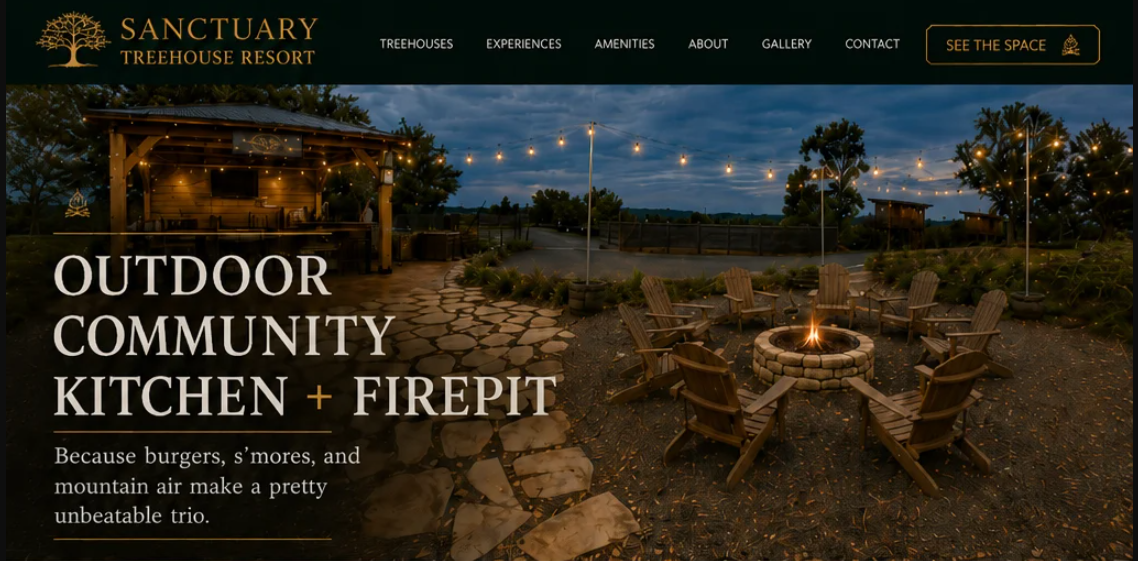
One of the most common situations I encounter as a WordPress and Divi developer is inheriting a project someone else abandoned. The client has done everything right — prepared detailed content, created layout mockups, stayed available, given clear instructions — and still ended up with nothing to show for it. That was exactly the situation when the owner of Treehouse Resort reached out on Fiverr needing new Divi pages, WooCommerce product setup, and a shopping cart guests could actually use to book online. This post walks through how I assessed the project, what I proposed, and why honest scoping matters more than just saying yes.
The Client and the Problem
Who They Were
Treehouse Resort (treehouseresort.com) is a hospitality and travel business offering unique treehouse accommodation experiences. The resort owner needed several new pages added to their existing WordPress and Divi website, including a Scavenger Hunt page, a Little Readers Box page, outdoor kitchen and package add-on pages, a refreshed FAQ section, and an improved header and footer layout. Beyond the pages themselves, they also needed the existing WooCommerce shop activated and stocked — configured so guests could purchase multiple treehouses, packages, and merchandise together in a single transaction.
What Was Not Working
The resort had hired a developer before me. That developer received everything — AI-generated layout mockups, a Google Drive full of images, a step-by-step Google Doc with instructions and content — and still failed to deliver. After three deadline extensions, the developer gave up and left the project in an incomplete state. Draft pages were still sitting on the site, some indexed by Google through the sitemap, and the WooCommerce cart had never been properly configured.
The client was understandably cautious: "I just don't want to find myself doing extensions again and available to edit and work on this only to see someone give up and waste more time."
This is a situation I see regularly. The problem is almost never the client. It is a developer who takes on work beyond their actual skill set — or who fails to understand the real scope before starting.
What I Proposed
Reviewing the Site Before Quoting
Before sending any number, I reviewed the website structure directly by checking the page sitemap at treehouseresort.com/page-sitemap.xml. What I found immediately changed the scope of the conversation. This was not a four-page build. There were already multiple draft and incomplete versions of the Scavenger Hunt page, Readers Box page, Outdoor Kitchen pages, and FAQ variations — some created by the previous developer, some started and abandoned mid-way. Several were still being indexed by Google.
I told the client exactly what I found. A lot of developers skip this step and just quote based on the initial message. That is how projects go over scope, over budget, and over deadline. My WordPress development process at CodeSyte always starts with a proper site audit before any number is agreed.
Phase 1 Scope — Flat Rate $700, 12 Days
Based on the audit, I proposed a clear Phase 1 scope covering:
- Build and refine the Scavenger Hunt page
- Build and refine the Little Readers Box page
- Build and refine the Outdoor Kitchen and package add-on pages
- Update and redesign the FAQ section
- Improve the header and footer layout for visual consistency
- Clean up and remove or redirect duplicate and draft pages
- Sync styling across new and existing pages
- Activate and organise the WooCommerce shop
- Upload products, packages, and merchandise
- Configure multi-item checkout for treehouses, packages, and merchandise
- Full mobile responsiveness across all pages
Flat rate: $700. Timeline: 12 days including revisions and testing. No surprises after the quote is agreed — that is how I work on every Divi website project.
The Build Process and Tools
Divi as the Page Builder
The existing site was built entirely in Divi. All new pages would be built to match the existing style — same fonts, colour palette, section spacing, and module types — while improving the layout quality based on the mockups the client had created. The client had done genuinely good work with their AI-generated mockups. They were clear, detailed, and gave a strong visual direction. A capable developer should have been able to implement them without difficulty.
My Divi expert development service covers exactly this — building custom pages that match and extend an existing design system cleanly, not just dropping in generic templates.
WooCommerce Configuration
The WooCommerce cart already existed on the site but had never been activated or loaded with products. The key functionality the resort needed was multi-item purchasing — guests should be able to select a treehouse, add package upgrades, and pick merchandise items all in a single checkout transaction. This is standard WooCommerce behaviour when configured correctly, but it requires proper product types, cart settings, and checkout flow to be set up in the right order.
WooCommerce setup and product configuration is one of the core services I provide at CodeSyte — from simple product uploads to complex cart logic for hospitality and booking-adjacent businesses.
Site Cleanup and Duplicate Page Management
One of the less visible but most important parts of this project was the cleanup work. Pages that a previous developer creates and abandons do not simply disappear. They sit in the WordPress page list, sometimes still indexed by search engines, sometimes conflicting with the pages the client actually wants live. Part of any proper Divi or WordPress project handover involves identifying what should stay, what should be redirected, and what should be removed — before new work begins.
The Result
The Project Did Not Move Forward — And That Is Honest Too
After our conversation, the client decided to go another route. They were polite about it, and I wished them well. Not every lead becomes a project, and that is a normal part of freelance development work.
What this conversation does illustrate clearly is the difference between a developer who jumps straight to yes and a developer who does the work of proper scoping first. The client came in asking for four pages at an unknown price from a previous bad experience. Within the conversation, I had reviewed the sitemap, identified the real scope, explained the duplicate page issue, proposed a structured two-phase plan, and given a flat rate with a realistic timeline.
That approach — regardless of whether the project proceeds — is what builds trust. The client said it directly: "Yes, you get it. I like this already."
What the Finished Site Would Have Done
Had Phase 1 been completed, Treehouse Resort would have had a fully functional set of new experience pages matching their existing design, a cleaned-up site structure with no orphaned drafts or indexed duplicates, a live WooCommerce shop with products loaded and a multi-item cart configured, and an improved header, footer, and FAQ section. Phase 2 would have covered advanced booking flow, bundled packages, and merchandise expansion.
Key Takeaway for Resort and Hospitality Websites
The Most Common Reason WordPress Projects Fail
It is rarely bad instructions. The Treehouse Resort client had done everything a client could reasonably do — mockups, content, a structured Google Doc, image assets, availability to answer questions. The previous developer simply did not have the capability or honesty to say so upfront.
When a WordPress or Divi project fails, the fault is almost always one of three things: the developer underestimated the scope and quoted too low, the developer lacked specific experience with the platform or plugin stack involved, or the developer agreed to deadlines they had no realistic plan to meet.
What Good Scoping Actually Looks Like
Good scoping means reviewing the actual site before quoting, not just the message. It means checking the sitemap, the page list, the existing WooCommerce configuration, and the installed plugins. It means telling the client what you find — even if that means a higher number than they were hoping for. And it means breaking the work into phases so the client can see progress and adjust scope without the whole project becoming a single undeliverable block.
If you are running a resort, hospitality, or travel website on WordPress and Divi and need someone who will scope your project properly before touching anything — that is exactly the kind of work I do at CodeSyte. You can explore my full WordPress, Divi, and WooCommerce services here.
Final Thoughts
The Treehouse Resort conversation was a short one, but it is a good example of the right way to approach an inherited or partially built WordPress project. Audit before you quote. Be honest about what you find. Propose phases. Give a flat rate with a realistic timeline. And if a client has already been let down once, acknowledge that — because it matters to them, and it should matter to you.
Not every conversation becomes a project. But every conversation is a chance to show how you work. If your WordPress or Divi website needs new pages, WooCommerce setup, or a full site cleanup after a previous developer left things unfinished, get in touch at CodeSyte and I will review it properly before we agree on anything.