How a $10 Divi reCAPTCHA Fix Turned Into a $220 Website Build — A Client Journey
Most developers ignore the small jobs. A $10 task feels like it is barely worth the login credentials, let alone the time. But small jobs done well are relationship investments — and this case study is the proof. In March 2025, Raymond came to CodeSyte with the simplest possible brief: add reCAPTCHA to two Divi contact forms on his South African surfaces company website. The job was done in under two hours. Six months later, Raymond came back with a full four-page Divi WordPress website build for a new client — Infinitech, a South African VoIP and telecommunications reseller. This post covers both projects, the technical detail behind Divi's reCAPTCHA options, and what the Infinitech build looked like from brief to delivery.
The First Job — reCAPTCHA on a Divi Website
A $10 Brief and a Budget Negotiation
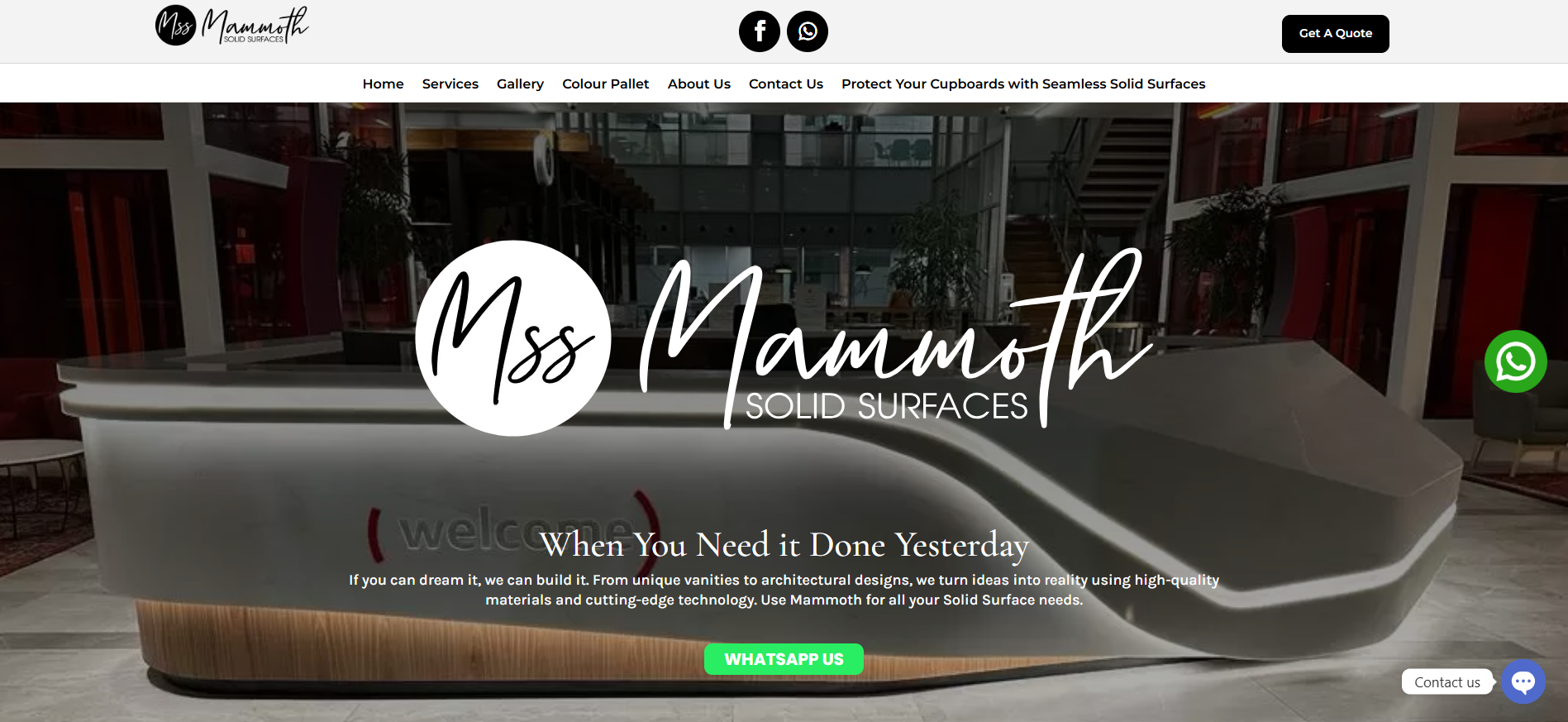
Raymond's first message was direct: he needed reCAPTCHA added to two contact forms on his Divi website — mssurfaces.co.za, a South African surfaces and shopfitting business. The original quote was $20. Raymond's budget was $10. Rather than walking away from a small job, the price was met — not because $10 is a meaningful amount of revenue, but because the client clearly had more work and the first impression mattered.
The job itself was straightforward: access the WordPress admin, navigate to Divi's built-in form settings, configure reCAPTCHA v3 via the Google reCAPTCHA API keys, and verify it was firing correctly on both form pages — the Contact Us page and the Exclusive Free Labour Offer landing page for shopfitters in Gauteng. Total time from login to delivery: under two hours.
This kind of quick Divi maintenance task is exactly what I handle through my WordPress and Divi support services at CodeSyte — fast, clean, no drama.
Divi reCAPTCHA v3 vs Checkbox — What's the Difference
Why Raymond Didn't See the Checkbox He Expected
After delivery, Raymond came back with a question that many Divi users have: he could not see the "I am not a robot" checkbox he had expected. He knew what reCAPTCHA looked like from other websites — the familiar ticked checkbox from Google's reCAPTCHA v2 — and what was implemented looked different.
This is a genuine source of confusion on Divi websites, and it is worth explaining clearly.
reCAPTCHA v2 — The Checkbox Version
Google's reCAPTCHA v2 is the version most people recognise: the checkbox that says "I am not a robot," sometimes followed by an image challenge asking you to identify traffic lights or fire hydrants. It is visible, interactive, and clearly signals to users that the form is protected. The limitation is user friction — every form submission requires an extra click, and on mobile the image challenges can be frustrating.
reCAPTCHA v3 — The Invisible Version
reCAPTCHA v3 is invisible. There is no checkbox. Instead, Google's system runs in the background and assigns a trust score to the user based on their browsing behaviour — how they moved their mouse, how long they spent on the page, whether the session looks like a human or a bot. If the score falls below a threshold, the form submission is blocked silently. The only visible element is a small reCAPTCHA badge in the bottom right corner of the page.
Divi's native form integration supports reCAPTCHA v3 — not v2. This means the checkbox experience is not available through Divi's built-in form settings. If a client specifically requires the v2 checkbox, the solution is to use a separate form plugin — WPForms, Gravity Forms, or Formidable Forms — which support both v2 and v3, and embed the form into the Divi layout. For Raymond's use case, reCAPTCHA v3 was the correct choice: it protects both forms from spam without adding friction for genuine users, and it matched what Divi natively supports.
Understanding the difference between these two versions — and communicating it clearly to a client who expected one and received the other — is part of what professional Divi WordPress development and support at CodeSyte looks like.
Six Months Later — The Relationship Grows
Raymond Comes Back With More Work
In September 2025 — six months after the reCAPTCHA fix — Raymond reached out again. He was getting more client work and needed a developer he could rely on for consistent delivery. After a quick call to discuss scope and availability, he shared the brief for his first referral project: a four-page Divi website for Infinitech, a South African VoIP, SIP trunk, and unified communications reseller based in Pretoria.
The Infinitech project had a detailed content document prepared in advance — full page copy, section-by-section layout instructions, Divi module recommendations, CTA wording, image notes, and tone guidance. This level of brief preparation made the build significantly more efficient. The quote was $220 for four pages in five days.
This is the direct return on the $10 reCAPTCHA job done six months earlier. The small job built the trust that unlocked the referral relationship.
The Infinitech Website Build
The Client and the Scope
Infinitech (infinitech.net.za) is a South African VoIP wholesale and reseller support business offering SIP trunks, hosted PBX, Microsoft Teams Direct Routing, SBCaaS, call recording, omnichannel contact centre solutions via QContact, and VoIP billing services. Their primary audience is IT resellers and MSPs — not end-users — and the website needed to speak to that audience in clear, outcome-focused language rather than technical specifications.
The four pages scoped were: Home, Solutions, Technology Partners, and Contact / Become a Reseller. Each page had a full copy brief with section structure, CTA wording, Divi module suggestions, and image direction. The design reference was vodcs.co.za — a site Raymond had previously built for the same client — described as invoking emotion through a human element rather than a corporate, product-catalogue approach.
Homepage — Hero to Conversion
The Infinitech homepage was structured around a clear reseller-focused narrative: hero section with dual CTAs (Become a Reseller / Apply Now), a five-point What You Get on Day One section, a How You Make Money common plays grid covering Teams Calling, Hosted IPBX, Compliance Recording, SIP Trunks, and Omnichannel, a Support section with named engineer and proactive monitoring messaging, a three-step process block (Scope → Deploy → Support), two case win cards, a FAQ accordion, testimonials, and a final conversion block.
Every section ended with a CTA. The tone throughout was warm, direct, and outcome-first — following the content brief's instruction to lead with emotion, clarity, and proof before the CTA. WhatsApp quick contact integration was added alongside the phone number in the hero and contact sections.
Solutions, Technology Partners, and Contact Pages
The Solutions page featured nine individual solution blocks — VoIP and Cloud PBX, Microsoft Teams Calling, Call Recording, Omnichannel Contact Centre, SIP Trunks, VoIP Billing, Internet connectivity, Monitoring and Alerts, and Custom Design and White-Label Support — each written for both reseller and end-user audiences with its own CTA. Bundle packages were presented as a shortcut section for clients who needed a quick starting point.
The Technology Partners page featured individual partner cards for Yeastar, AudioCodes, Algo, QContact, and FlyingVoice — each with a "Why It Matters," "Great For," and "We Help You With" structure rather than a standard logo grid. A trust badge row and a soft CTA block for clients who did not know which product they needed were included.
The Contact page used a conditional form structure — a radio button selection between "I want to resell Infinitech services" and "I'm a business owner needing help" — with different form fields loading based on the selection. A WhatsApp block, a location block, a Partner Portal teaser, and a soft final CTA completed the page. This conditional form logic was built using WPForms with conditional logic rules, embedded within the Divi layout.
All four pages were built to be fully mobile responsive — a point the client specifically followed up on after initial delivery. Mobile optimisation across all Divi sections was confirmed and any remaining breakpoint issues were resolved before final sign-off. This is standard practice on every Divi WordPress website project at CodeSyte.
The Result
What Was Delivered
- Four-page Divi WordPress website live at infinitech.net.za
- Homepage with full reseller-focused content, nine CTAs, FAQ accordion, testimonials, and WhatsApp integration
- Solutions page with nine individual solution blocks and bundle packages section
- Technology Partners page with partner cards for five vendors
- Conditional contact and reseller application form using WPForms logic
- Full mobile responsiveness confirmed across all pages
- Delivered within five days at $220
Client Feedback
After delivery and the design team's review: "Our main designer did go through and is happy. She is going to change the images today and if we have changes she will let you know." Raymond subsequently confirmed the mobile optimisation was complete and expressed satisfaction with the overall delivery. The relationship continued with Raymond requesting a quote for a further Divi mobile responsiveness project on cyborgspill.com — a separate client site — in October 2025.
Key Takeaway: Small Jobs Are Relationship Investments
The $10 Job That Returned $220
The direct financial return on the MS Surfaces reCAPTCHA fix was $10. Six months later, the same client brought a $220 referral project. That is a 2,200 percent return — and it came entirely from doing a small job correctly, explaining a technical detail clearly when the client was confused, and staying available without pressure when Raymond said he would come back when he had work.
This pattern repeats across almost every long-term client relationship in freelance development. The first job is never about the first job. It is about whether the client trusts you enough to think of you when something bigger comes up. A developer who ignores $10 jobs or handles them carelessly is cutting off the relationship before it starts.
A Detailed Brief Is Worth More Than Any Template
The Infinitech website was built faster and more accurately than most four-page websites because the content brief was exceptionally thorough. Section-by-section copy, Divi module suggestions, image direction, tone notes, CTA wording, and a reference site were all provided before a single line of development began. The result was a build with minimal revision rounds and a design team sign-off on the first review.
If you are commissioning a WordPress or Divi website, the single most valuable thing you can do before contacting a developer is prepare your content. Not a rough idea of what you want — actual copy, actual section structure, and at least one reference site that captures the tone and feel you are aiming for. The build will be faster, cheaper, and closer to what you envisioned.
Final Thoughts
From a $10 reCAPTCHA fix to a $220 Divi website build for a South African VoIP reseller — the Infinitech project is a straightforward example of what consistent, professional work on small jobs produces over time. The technical work was solid. The communication was clear. The delivery was on time. And Raymond came back.
If you need Divi WordPress support — whether it is a quick fix, a full website build, or anything between — that is exactly what I do at CodeSyte. Explore my full Divi and WordPress design, development, and maintenance services here, or get in touch directly and I will review your brief before we agree on scope or timeline.