Figma to WordPress Website for IPSOR Capital: A 10-Page Investment Site Case Study
Financial firms cannot afford a website that looks improvised. When a client came to me on Fiverr asking for a Figma to WordPress website modelled on one of Canada's most polished wealth management sites, I knew the design bar would be high and the timeline tight. This case study walks through the full project for IPSOR Capital AG — from the first custom order request to the final delivery on their live domain. I'll cover how I scoped the work, why we added a Figma design stage, the build in Elementor, and the communication challenges that stretched a 16-day order across two months. If you're a business owner planning a premium WordPress site, or a freelancer handling design-first projects, this one is for you.
The Client & The Problem
Sean reached out through a promoted custom order request on Fiverr in early June 2025. His brief was short but clear: build a website like nicolawealth.com/our-services — roughly 10 pages — for his investment firm, IPSOR Capital AG. The reference site is a high-end wealth management platform with a mega menu, layered service pages, and a very deliberate corporate feel.
Sean had specific requirements from the start. He wanted a black and gold accent across the whole design, shared his logo in both transparent and non-transparent versions, and sent a draft image of how the landing page should be structured. The menu alone had seven top-level items — Our Services, Asset Management, IPSOR Capital, About, Contact, Search, and a "Meet With Us" call to action — each with its own sub-menu.
The constraints
There were three real constraints on this project. First, the initial budget of 250 euros was tight for a 10-page replica of a premium financial site. Second, the client asked early on: "are you going to use figma to design the UI first?" — which meant a full design stage before any WordPress work began. Third, the timeline was urgent on his side, while Eid holidays were approaching on mine. A domain (ipsorcapital.com) and Bluehost hosting were already in place, with an existing site on the domain that had to remain untouched during the build.
What I Proposed
I quoted the website build alone at 280 euros using Elementor on WordPress. When Sean confirmed he wanted the Figma UI designed first, I explained the honest trade-off: Figma adds cost and time, because every page gets designed, reviewed, and approved before implementation. We agreed on a combined package of $350 USD covering both the Figma design of all 10 pages and the full WordPress build, with 5 revisions included.
On the timeline, I refused to overpromise. Sean asked if the whole website could be done by Friday. I told him plainly that Figma alone takes 3 to 4 days, and with the holidays, I needed 16 days minimum. He pushed back — "16 days is too long… what is your best offer?" — but after I held my estimate, he agreed: "ok, let us do 16 days." Setting realistic timelines up front is something I apply to every project at CodeSyte's WordPress development services, because a rushed financial website helps nobody.
We also clarified scope carefully. The reference site had a client login portal; I confirmed that a full client access system was not included, but that Sean's team would absolutely be able to log in to WordPress and edit content themselves — "just something basic," as he put it. His response: "ok perfect." That distinction between a WordPress admin login and a custom client portal saved us from a painful mismatch later.
Before accepting, Sean asked about my experience. I told him honestly: providing services on Fiverr since 2020, with 250+ orders for 140+ clients. His reply set the tone for the relationship: "ok then please send me the order… there will be 2 websites to be done in total. We start with the first one and see how it goes."
The Build Process
Stage 1 — Figma design first
Within two days of the order, I had the first pages designed in Figma and shared the file for review. This stage surfaced a useful lesson about client onboarding: Sean couldn't figure out how to preview the design. I walked him through using the play icon and the "fit width" preview option, and explained that Figma buttons are static — everything becomes functional only once implemented in WordPress. If you've never handed a Figma file to a non-technical client, budget time for exactly this kind of guidance. It's part of the service, and it's the kind of hands-on support I build into every website design project at CodeSyte.
Sean's first substantive feedback was fair: the preview still showed the reference site's branding, and he wanted to see "IPSOR Capital AG – A Limited Qualified Investor Fund" in the design. I explained the workflow we'd agreed — replicate the reference structure first, then rebrand with his company name, logo, and content — and proceeded to amend the design.
Stage 2 — Content gaps and communication delays
This is where the honest part of the case study begins. Two pages had no source material: the "IPSOR Capital" page didn't exist on the reference site, and the "Meet With Us" page on the reference used three different forms driven by a dropdown. I asked whether to replicate that functionality or use a simple contact form, and requested content for the missing page.
The answers took time. Content arrived by email over a week later as a web document, and Sean introduced Julia, his colleague in charge of the project, as my new point of contact. Feedback cycles slowed, and I requested two delivery extensions — 6 days, then 7 days — which Sean accepted both times without friction. Extensions are never fun, but requesting them formally through Fiverr, with clear reasons, kept the order healthy and the trust intact. That transparency is a standard I keep across all CodeSyte client projects.
Stage 3 — WordPress build in Elementor
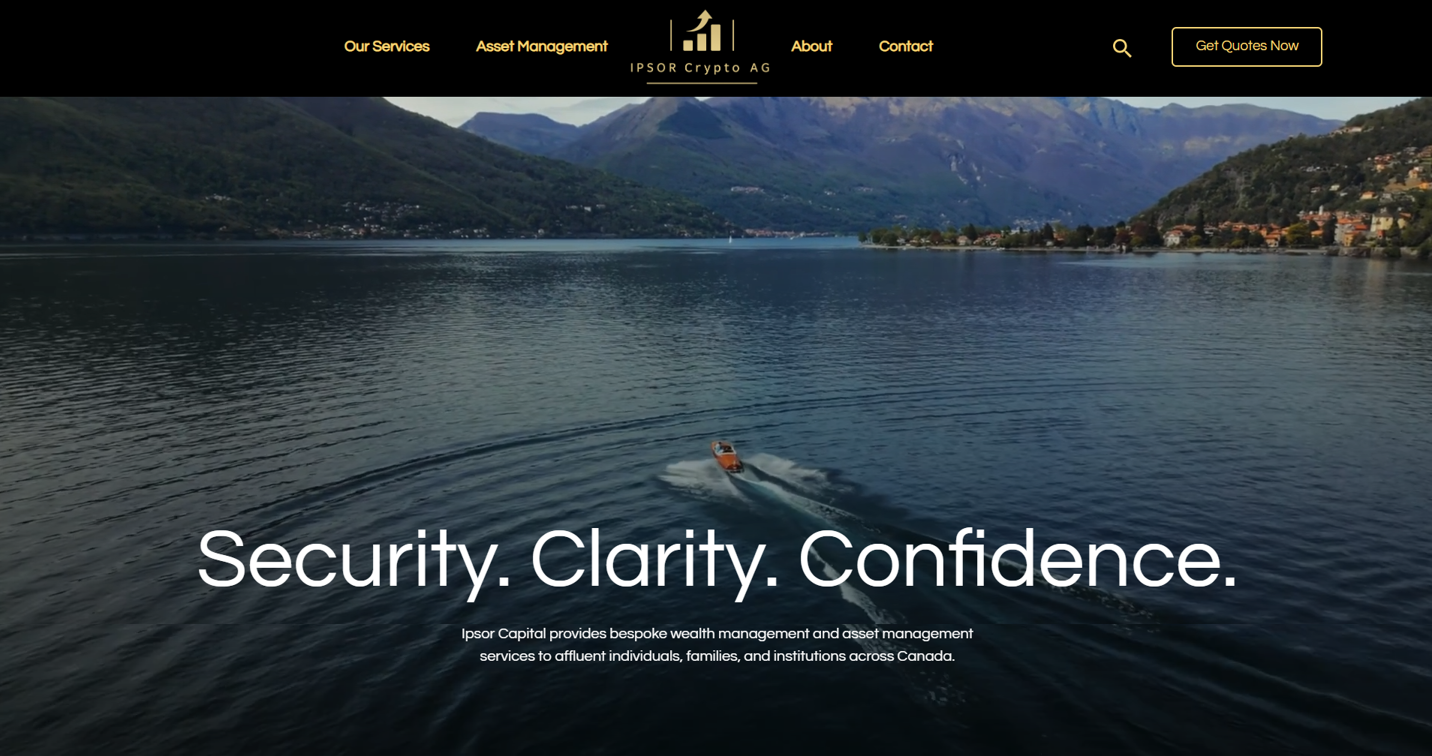
With the Figma direction approved, I built the site in WordPress with Elementor on the client's Bluehost account, working in a separate installation so the existing site on ipsorcapital.com stayed live throughout. The delivered pages included Home, Our Services, Asset Management, About Us, and Contact, all styled in the black and gold identity, with the full mega menu structure and mobile-responsive layouts matching the reference on both desktop and phone.
I ran two live revision sessions with Julia, implemented her change requests directly on the site, and showed her how to update content herself through the WordPress dashboard — fulfilling the "we want to log in and edit content" requirement from day one. Client training like this is a small investment that dramatically reduces support requests, and it's baked into every WordPress service I offer.
Stage 4 — Delivery, revisions, and migration
The order went through three formal deliveries. After the first, Sean requested a revision because the site hadn't yet been transferred to his Bluehost directory. After I received written confirmation from Julia, I migrated the website to his domain, shared all login details by email, and delivered again. A final round of corrections followed — "there are still lots of corrections to do, Julia will contact you" — and I completed those before the third and final delivery on July 24, 2025. Even after delivery, I followed up twice offering to fix anything still pending, because delivery isn't the same as done.
The Result
IPSOR Capital AG now has a live, 10-page-structure corporate website at ipsorcapital.com, built on WordPress with Elementor, matching the premium feel of the wealth management reference site while carrying its own black and gold identity. The team can log in and edit every page themselves, the mega menu and sub-menus mirror the agreed structure, and the site is fully responsive on mobile.
Just as importantly for the working relationship: Sean accepted both extension requests, confirmed delivery through his colleague Julia, and had told me from the start that a second website would follow if the first went well. A $350 order that opens the door to repeat work is a better outcome than a $500 order that ends the relationship. If your firm needs a similarly polished build, you can see the full range of options on the CodeSyte services page.
Key Takeaway
Three lessons stand out from this project. First, hold your timeline estimate. Sean pushed hard for a Friday delivery, and agreeing would have wrecked the project. Sixteen honest days beat five impossible ones, and he accepted the estimate within twenty minutes of me holding firm.
Second, define "login" precisely. The reference site had a client investment portal; the client actually needed a WordPress editor login. One clarifying screenshot in the chat prevented a scope disaster worth far more than the order value.
Third, design-first projects live or die on content. The Figma stage went quickly; waiting on page content and feedback is what consumed the extra weeks. If you're commissioning a website, having your content ready before the build starts is the single biggest thing you can do to hit your deadline.
Planning a corporate website of your own — whether it's a Figma-first design, a full WordPress build in Elementor or Divi, or a redesign of an existing site? I'd be glad to scope it honestly, the same way I did here. Explore what I can build for you at codesyte.site/service, and let's talk about your project.